Creative Acts Part One: Writing
- EmmaLee Darr
- Apr 9, 2024
- 5 min read
As a child, I only had one answer when asked what I wanted to be when I grew up: a writer. Raised in a home where books were a part of our daily lives, I suppose it was natural to want to be an author and create books like the ones I relished every day. While other kids my age spent time on the computer playing Sims, I wrote stories and poetry. I filled notebooks and journals with my ideas. And I learned something about myself in those early years: I can express my thoughts and ideas much better on paper than I can by speaking them out loud.
As an adult I still often turn to paper and pen when I’m struggling with something. I’ll retreat to the other room in the middle of a fight with my husband and text him what I’m thinking, not because I want to form the perfect argument to make my defense with, but because it allows me to process through what I’m saying and communicate it in a kind way, rather than spewing my emotions as I often do verbally. I journal my prayers every single day, because I’ve learned it helps me stay focused. I use a paper planner instead of google calendar because the act of writing it down helps me remember it. I take handwritten notes during the Sunday sermon and Sunday school for the same reason. And I originally started this blog as a way to process things I was learning in my own life.
I’m a quiet introvert who isn’t the first to speak up in a group; I process things on my own rather than verbally. But even extroverts and verbal processors still write on a daily basis, whether for their job, helping kids with homework, writing a grocery list, or sending a text or email. And writing is another way we worship the Creator, who is also called THE WORD in John 1:1-3: “In the beginning was the Word, and the Word was with God, and the Word was God. He was with God in the beginning. All things were created through Him, and apart from Him not one thing was created that has been created.” Christ is both the Creator of the world and the Word. How beautiful is it to reflect His character to the world by creating with our words?
So how do we encourage creativity with our children? If we think back to how we defined creativity last week, we remember that creativity is more about ideas than it is action. So as we walk through the following “steps” I want you to try to think in terms of ideas around writing: both the ideas that are going to FUEL the writing, and the ideas that are being processed and communicated DURING the writing.
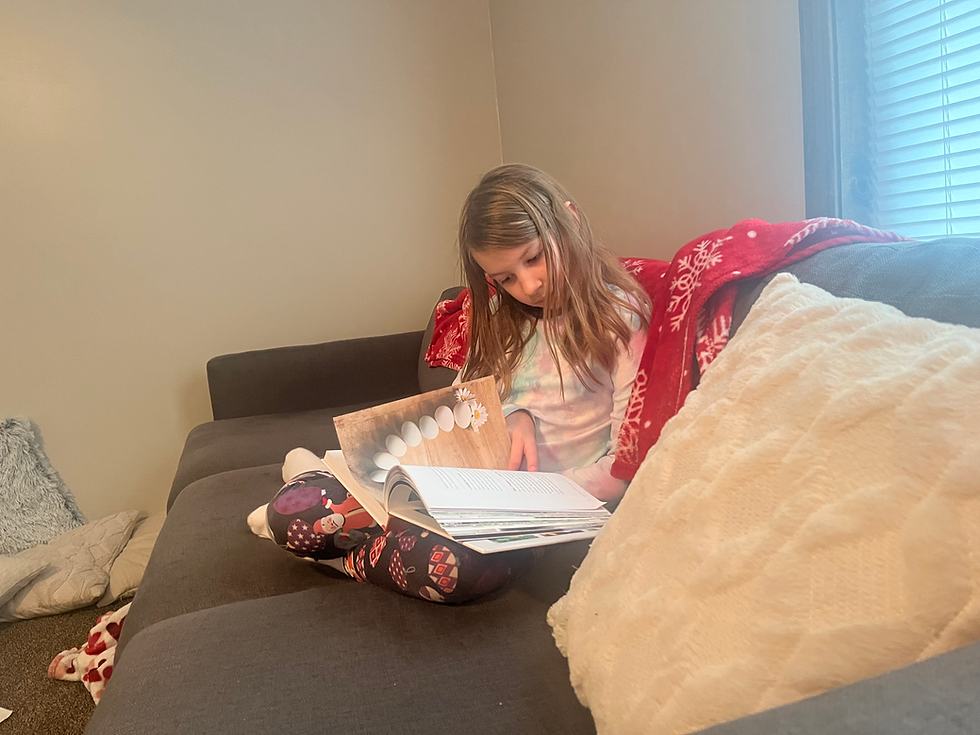
Fill your child’s minds with good writing, particularly in the forms of stories. Andrew Pudewa, founder of the Institute for Excellence In Writing, is famous for saying “You can’t get out what you don’t put in.” There’s no way around this: our kids aren’t going to be good writers if they don’t read good books. Think of ANY author you consider a good writer; I bet if you research their life you will find they love(d) to read. Reading builds our children’s vocabulary, teaches correct form for writing in a much more meaningful way than any workbook can, and fills their mind with good, true, and beautiful ideas.
Let your children write stories. I want you to put aside all academic thoughts about writing for a moment. Consider God’s Word: how is most of it written? Does it read like a dry, boring academic text, where the goal is to communicate information and only information. Of course not! If you’ve spent any amount of time studying God’s Word you know that it is a riveting narrative, a story; a true one, yes, but still a story. It’s full of human emotion, it contains the deepest depths of sin and the most beautiful, perfect sense of holiness. Each individual book is its own story, yet they are all tied together by one big, grand story of the gospel that spreads through every page from Genesis to Revelation. So what better way to teach our children to worship their Creator than to write stories? Andrew Peterson (author of the phenomenal children’s series Wingfeather Saga, which reads like a Christian epic much like how Lewis’s Narnia does) says in Adorning the Dark that “Somewhere out there, men and women with redeemed, integrated imaginations are sitting down to spin a tale that awakens, a tale that leaves the reader with a painful longing that points them home, a tale whose fictional beauty begets beauty in the present world and heralds the world to come. Someone out there is building a bridge so we can slip across to elf-land and smuggle back some of its light into this present darkness.” What if our children are the next ones to “build the bridge”? What if God is working in their hearts even now to someday write the “next Narnia”? And even if that’s not their calling, they can still worship the Lord through their writing in the here and now.
Make sure your kids see writing as a part of your life, too. There’s no getting around the fact we live in a digital world; it’s a reality that’s here to stay and that our children should certainly be being prepared for. Yet isn’t it amazing that as advanced as technology is, books and writing, actual words on paper, haven’t become obsolete? Paying with cash nearly seems like a thing of the past, yet I see more and more people returning to reading physical books and abandoning their kindles. Many people are quitting their digital calendars and buying a paper planner. I don’t think writing is going anywhere, but part of the way we make sure of it is to model it for our children. Just like we have discussed creativity in general, our kids won’t think it’s important or maybe even an option, if they don’t see us doing it. So write stories and share them with your kids. Let your kids see you using a paper planner or journal. Make writing a part of your life and make sure your kids see you doing it.
Writing is always the easiest aspect of creativity for me to talk about because it’s what comes naturally to me. Next we will talk about a harder aspect of creativity for me: art, specifically painting and drawing. For some of you this may be an easier component of creativity; isn’t it beautiful that God has gifted us each differently! But let’s show our children that we can use ALL these things to bring Him glory, REGARDLESS of if we are good at them!


Comments